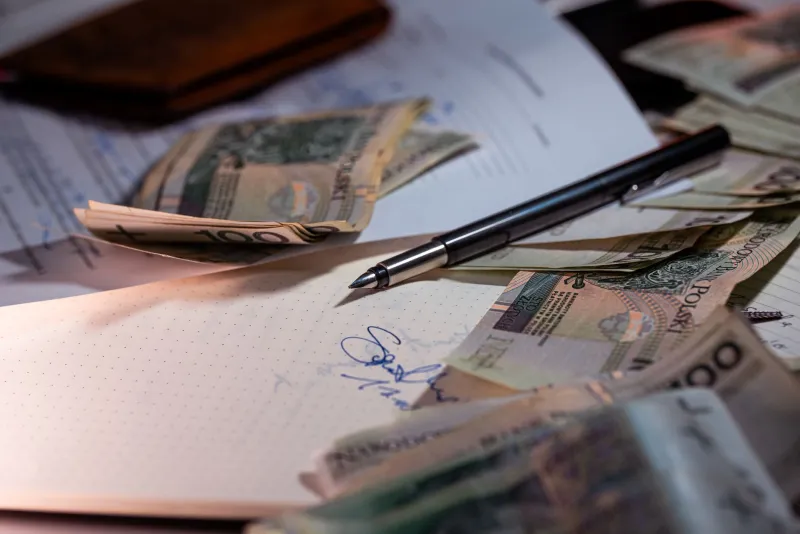
The Little-Known Loan Cap: How Federal Credit Unions Quietly Undercut America's Most Expensive Borrowing

Walk past a payday lending storefront in Ohio, Texas, or Nevada and you may see APRs advertised in the triple digits — 391%, 500%, sometimes higher. Walk into a federally chartered credit union down the street, however, and you may find a product most Americans have never heard of: the Payday Alternative Loan, a small-dollar loan whose interest rate is capped by federal regulation at just 28% APR.
The gap between those two numbers is not a rounding error. It is the difference between a $500 loan costing roughly $75 over a term of a few months and the same $500 loan costing $75 every two weeks until it becomes unpayable. Yet federal regulators report that only a small fraction of eligible borrowers ever use PALs — largely because so few people know they exist.
What Exactly Is a Payday Alternative Loan?
A PAL is a small-dollar installment loan authorized by the National Credit Union Administration (NCUA) and offered exclusively by federal credit unions. There are two versions:
- PALs I: Borrow between $200 and $1,000 with a repayment term of one to six months. The APR is capped at 28%, and lenders may charge a one-time application fee of no more than $20.
- PALs II: A newer option allowing loans up to $2,000 with terms of one to twelve months, also capped at 28% APR, with a $20 maximum application fee.
Both versions carry important consumer protections that payday lenders are not required to offer. There are no balloon payments, no rollovers that extend the debt cycle, and no penalty for paying the loan off early. Credit unions must also limit borrowers to two or three PALs within any six-month period, a structural guardrail designed to prevent repeat borrowing.
For context, the typical payday loan carries an annualized rate that can exceed 400% in states where the practice is legal. A credit card cash advance, meanwhile, usually runs 29% to 30% APR plus a transaction fee of around 5% — expensive, but still a fraction of payday pricing.
A Side-by-Side Comparison
Consider a borrower who needs $500 for a car repair:
- Payday loan: A two-week loan at $15 per $100 borrowed costs $75. If the borrower cannot repay and rolls the loan over repeatedly — as the Consumer Financial Protection Bureau has found happens to many borrowers — the total fees can easily surpass the original loan amount within a few months.
- Credit card cash advance: At roughly 30% APR plus a $25 fee, the first-month cost is about $37, and the balance can be paid down over time. The catch, of course, is having an open credit card with available credit in the first place.
- PALs I from a federal credit union: A six-month, $500 loan at 28% APR with a $20 application fee costs roughly $62 in total interest and fees — spread across manageable installments, with the balance shrinking every month.
The comparison is not close. Where a payday loan is engineered to be repaid in a single lump sum from the next paycheck, a PAL is structured like a conventional installment loan, which financial counselors generally view as far less likely to trap a borrower in a cycle of debt.
The Membership Hurdle — and Why It Is Smaller Than You Think
The main reason more borrowers do not use PALs is the assumption that credit unions are closed clubs. In reality, joining one is often a matter of a single eligibility thread:
- Employer or association affiliation: Many credit unions serve specific employers, unions, or professional groups.
- Geography: A large number of credit unions accept anyone who lives, works, worships, or attends school in a defined area — sometimes an entire state or county.
- Family ties: Eligibility commonly extends to immediate relatives of current members.
- A modest donation: Some credit unions partner with community organizations where a small one-time contribution to a foundation establishes eligibility.
Once eligible, joining typically requires opening a savings account — sometimes with as little as $5 to $25 — and providing standard identification. From there, a borrower can ask specifically about PALs I or PALs II, since not every federal credit union offers them and branch staff may not volunteer the product by name.
Practical Considerations Before Applying
A PAL is not free money, and borrowers should weigh a few realities. Approval still depends on the credit union's assessment, though underwriting is typically more forgiving than at a bank, and some credit unions report PAL payments to the major credit bureaus — meaning on-time repayment can help build a credit profile. Loan amounts are genuinely small, so a PAL will not cover a major expense. And the 28% APR cap, while dramatically lower than payday pricing, is still higher than many unsecured personal loans available to borrowers with strong credit.
For borrowers with damaged or thin credit histories — precisely the population payday lenders target — those tradeoffs usually tilt heavily in favor of the credit union option.
A Quiet Corner of American Lending Worth Knowing
There is something almost deliberately understated about PALs. They carry no advertising budgets, no storefront signage, no celebrity spokespeople. They exist because Congress and the NCUA carved out a regulated space for small-dollar credit decades ago, and they remain one of the few borrowing products in America whose pricing is capped by federal rule rather than market pressure.
For any consumer who has ever stared down a $400 emergency with a checking account running low, knowing that a nearby federal credit union can lend that money at 28% APR — legally, transparently, and with a repayment plan — may be the single most valuable piece of lending knowledge available. The secret, as with so much in personal finance, is simply knowing to ask.