What Your Lender Isn't Telling You: The True Cost of Borrowing Across America
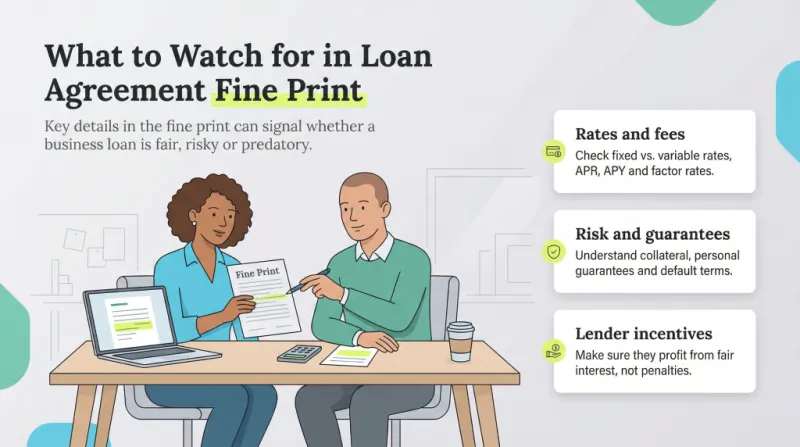
Photo: loan agreement fine print documents fees paperwork desk, via img-s-msn-com.akamaized.net
The Price Tag Behind the Interest Rate
When most Americans shop for a loan, they focus almost exclusively on the interest rate. It is the number prominently displayed in advertisements, the figure that lenders lead with during consultations, and the metric most borrowers use to compare offers. Yet the interest rate tells only part of the story. Buried within loan agreements — often in dense legal language — are fees and charges that can substantially inflate the true cost of borrowing.
At Finance Loans US, we believe that informed borrowers are empowered borrowers. That is why we have compiled a detailed examination of the fees lenders frequently downplay, organized by state and loan type, so that you can approach your next loan agreement with your eyes wide open.
Origination Fees: The Entry Tax on Borrowing
An origination fee is charged by a lender to process a new loan application. It typically ranges from 1% to 8% of the total loan amount, depending on the lender, the borrower's credit profile, and — critically — the state in which the loan is issued.
In states such as California and New York, regulatory frameworks require lenders to disclose origination fees prominently within the Annual Percentage Rate (APR). However, enforcement varies, and some lenders structure these fees as "administrative charges" or "processing costs" that technically fall outside standard APR calculations.
In Texas, personal loan origination fees are less tightly regulated for certain non-bank lenders, meaning a borrower taking out a $10,000 personal loan could pay up to $800 upfront before receiving a single dollar of benefit.
Florida presents a mixed picture. State law caps origination fees on consumer installment loans, but payday and title loan products — which are legal and widely available — operate under entirely different fee structures that can be far more aggressive.
Practical tip: Always ask your lender for the full APR that includes all origination fees, not just the stated interest rate. Federal law under the Truth in Lending Act (TILA) requires this disclosure, but borrowers must know to request it explicitly.
Prepayment Penalties: Punished for Being Responsible
Perhaps no fee is more counterintuitive than the prepayment penalty — a charge assessed when a borrower pays off their loan ahead of schedule. The logic from a lender's perspective is straightforward: early repayment reduces the interest income they anticipated earning. From the borrower's perspective, however, it feels like a punishment for financial responsibility.
Prepayment penalties are most common in auto loans and mortgage products, though they also appear in personal loans and small business financing. Their prevalence varies considerably by state:
- North Carolina prohibits prepayment penalties on most consumer loans, offering borrowers meaningful protection.
- Georgia allows prepayment penalties on mortgage loans but restricts them on loans with terms under five years.
- Ohio and Michigan have fewer restrictions on prepayment penalties for non-mortgage consumer products, making it especially important for borrowers in those states to read loan terms carefully.
- Arizona permits prepayment penalties on certain mortgage products, though federal rules introduced after the 2008 financial crisis have curtailed their use on qualified mortgages.
The financial impact can be significant. On a $25,000 auto loan, a prepayment penalty of 2% of the remaining balance — triggered when a borrower attempts to pay off the loan 18 months early — could cost $400 or more in unexpected charges.
Late Payment Fees and Grace Period Variations
Late fees are another area where state-level variation creates meaningful disparities for borrowers. While federal law does not cap late fees on most consumer loans, many states impose their own limits.
Illinois caps late fees on consumer installment loans at $25 or 5% of the overdue payment, whichever is less. Virginia, by contrast, allows late fees of up to 5% of the payment with no dollar cap, which can be particularly burdensome on larger loan amounts.
Grace periods — the window between a payment's due date and when a late fee is triggered — also vary. Some lenders offer a 10-day grace period; others charge immediately after the due date. This distinction is rarely highlighted in marketing materials but can matter enormously for borrowers who occasionally face cash flow timing issues.
The Rise of Administrative and "Junk" Fees
Beyond origination fees and prepayment penalties, a growing category of miscellaneous charges has drawn scrutiny from consumer advocates and state regulators alike. These include:
- Document preparation fees — charged for generating standard paperwork
- Verification fees — for confirming employment or income information
- Monthly maintenance fees — ongoing administrative charges that compound over the life of a loan
- Returned payment fees — assessed when an automatic payment fails, sometimes exceeding $35 per occurrence
States including Colorado and Minnesota have taken steps to restrict or require disclosure of these ancillary charges, while others have yet to address them legislatively. The Consumer Financial Protection Bureau (CFPB) has identified these "junk fees" as a significant area of concern at the federal level, though regulatory action remains ongoing.
How to Protect Yourself Before Signing
The most effective defense against hidden loan fees is preparation. Before committing to any loan agreement, consider the following steps:
-
Request the Loan Estimate or full fee disclosure — For mortgages, lenders are legally required to provide a Loan Estimate within three business days of application. For other loan types, ask explicitly for an itemized list of all fees.
-
Calculate the total cost of the loan — Multiply your monthly payment by the number of payments and add any upfront fees. Compare this figure across multiple lenders, not just the interest rate.
-
Ask about prepayment penalties in writing — Do not accept verbal assurances. Ensure the loan agreement explicitly states whether a prepayment penalty exists and under what conditions it would apply.
-
Use a loan comparison platform — Tools available through Finance Loans US allow you to compare the full cost of loan offers side by side, accounting for fees that individual lender websites may not prominently display.
-
Know your state's consumer protection laws — Your state attorney general's office and the CFPB website both offer resources specific to your location.
The Bottom Line
The interest rate on your loan is just the beginning of the conversation. Across America, a patchwork of state regulations and lender practices creates a fee environment that disproportionately affects borrowers who do not know what to look for. By understanding origination fees, prepayment penalties, late charges, and administrative costs — and how they differ from California to Georgia to Ohio — you place yourself in a far stronger negotiating position.
Smart borrowing begins with complete information. At Finance Loans US, our mission is to ensure that every American has access to the transparent, side-by-side comparisons needed to make truly informed lending decisions.