How a Single Fed Announcement Can Change Your Loan Rate Before You Finish Reading the News
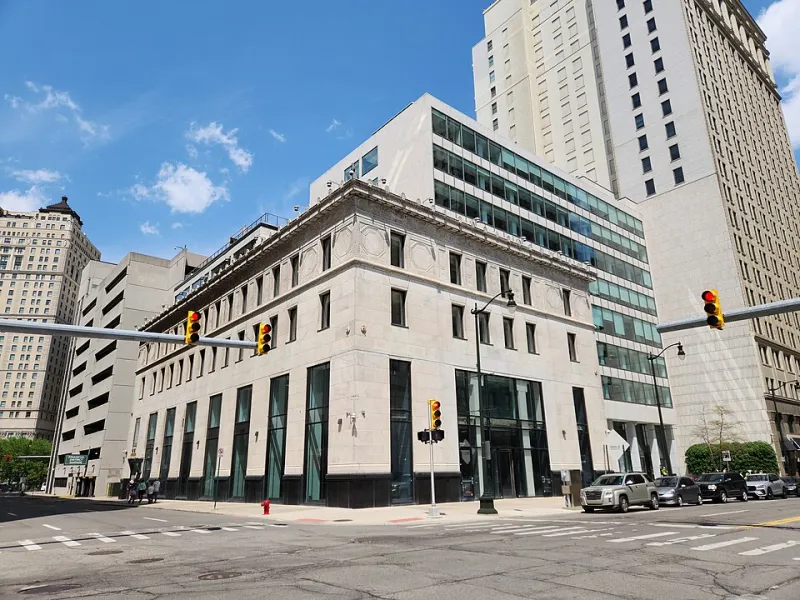
Photo: 42-BRT, CC BY-SA 4.0, via Wikimedia Commons
It is a Wednesday afternoon in Washington. The Federal Open Market Committee has just concluded its meeting, and the Fed Chair steps to the podium. Within minutes, headlines cascade across financial news platforms. By the time most Americans sit down to dinner, the lending landscape has already shifted — and not everyone shifts with it.
For borrowers actively shopping for personal loans, auto financing, or home equity products, Federal Reserve rate decisions represent one of the most consequential — and most misunderstood — variables in the loan comparison process. Understanding how that policy transmission actually works can mean the difference between locking in a rate from last week's pricing environment and catching the wave of a new one.
The Fed Does Not Set Your Loan Rate — But It Might As Well
A common misconception among American consumers is that the Federal Reserve directly controls the interest rates they see on loan applications. Technically, the Fed sets the federal funds rate — the overnight lending rate at which banks borrow from one another. Consumer loan rates are a downstream consequence, not a direct output.
However, that distinction matters less in practice than it sounds in theory. The federal funds rate serves as the foundational pricing signal for nearly every credit product in the U.S. market. Prime rate — the benchmark most banks use for variable consumer products — moves in lockstep with Fed decisions, typically adjusting the same day. The Wall Street Journal Prime Rate, for instance, has historically sat at exactly 3 percentage points above the federal funds target.
For fixed-rate products like personal loans and many auto loans, the connection is slightly less mechanical but equally real. Lenders price these products against Treasury yields and their own cost-of-funds calculations, both of which respond to Fed signals often before the official announcement is even made.
The Transmission Timeline: Hour by Hour
To understand the speed of this process, consider what happened following the Fed's rate decisions throughout 2023 and into 2024, a period during which the committee held rates at their highest level in over two decades before beginning a cutting cycle in late 2024.
Before the announcement: Experienced traders and institutional lenders price in anticipated Fed moves well in advance. By the time the FOMC statement is released, a significant portion of the expected rate change is already embedded in Treasury yields and wholesale funding costs. This is why mortgage rates, for example, sometimes fall immediately following a rate hike announcement — if the hike was smaller than anticipated, the market adjusts downward from its pre-announcement position.
Within the first two hours: Large national banks and fintech lenders with automated pricing engines typically update their rate tables within hours of a Fed announcement. Online lenders in particular — platforms that operate with dynamic, algorithm-driven pricing — may refresh their advertised APRs the same afternoon.
Within 24 to 72 hours: Regional banks, credit unions, and community lenders follow, often after internal review processes that factor in local market conditions alongside the national rate signal. Smaller institutions may take up to a week to formally update their rate sheets, creating a brief window of pricing divergence across the lender landscape.
Weeks later: Some specialty loan products, particularly those tied to less liquid funding markets, may take longer to fully reflect a policy change. Home equity lines of credit tied to prime rate adjust immediately; fixed-rate home equity loans may lag as lenders observe how longer-term rates settle.
Real Borrowers, Real Timing Decisions
Consider James, a 41-year-old contractor in Phoenix, Arizona, who was shopping for a $25,000 personal loan in the weeks surrounding the Fed's September 2024 rate cut. Having monitored Fed communications and futures market signals, James submitted applications to three lenders on the morning of the announcement rather than waiting.
Two of those lenders — both national online platforms — had already adjusted their pricing downward by the afternoon of his submission, offering him a rate that reflected the new environment. The third, a regional credit union, honored the pre-cut rate that appeared on his application, which was marginally higher. The difference across a 48-month term amounted to approximately $340 in total interest — not life-changing, but meaningful.
James's experience illustrates a core principle: timing your application relative to Fed announcements is a legitimate and underutilized borrower strategy.
Rate Shopping Windows and the Credit Inquiry Factor
One concern that often paralyzes borrowers during rate-sensitive periods is the impact of multiple credit inquiries on their FICO scores. The good news is that major credit scoring models — including FICO 8 and VantageScore 3.0 — treat multiple inquiries for the same loan type within a defined window as a single inquiry. That window is typically 14 to 45 days, depending on the scoring model.
This means a borrower can submit applications to five or six lenders within a two-week period without suffering the score penalty associated with five separate hard pulls. For anyone navigating a rate-change environment, this window should be used aggressively to capture the most competitive post-announcement pricing before lenders stabilize their offers.
How to Monitor Fed Signals Before They Become Headlines
Sophisticated borrowers do not wait for the announcement. They track the leading indicators that reliably forecast Fed behavior:
-
CME FedWatch Tool: This publicly available resource displays the probability of various rate outcomes at upcoming FOMC meetings, derived from federal funds futures contracts. When the market assigns 85% probability to a rate cut, lenders have typically already begun pricing that expectation in.
-
10-year Treasury yield movements: For fixed-rate loan products, watch the 10-year Treasury. A sustained decline in yield often precedes improved fixed-rate loan offers within days to weeks.
-
Fed Chair public remarks: Speeches, Congressional testimony, and press conference transcripts often telegraph policy direction weeks before formal votes. The Fed has deliberately adopted forward guidance as a policy tool, making these communications substantive rather than ceremonial.
-
FOMC meeting schedule: The committee meets eight times per year on a publicly posted schedule. Marking those dates on your calendar if you anticipate a loan application within the next six months is a simple but effective planning step.
What This Means for Your Next Loan Application
The practical takeaway for American borrowers is straightforward: treat Fed meeting dates as relevant variables in your loan application timing, just as you would treat your own credit score or debt-to-income ratio.
If consensus expectations point toward a rate reduction and you have flexibility in your application timeline, waiting until after the announcement — and then acting quickly to capture updated pricing from fast-moving lenders — can yield measurable savings. If rates are expected to rise, the calculus reverses: locking in a rate before the announcement becomes the priority.
None of this requires a background in economics. It requires awareness, a basic understanding of how the lending system responds to policy signals, and the discipline to act with intention rather than convenience.
At Finance Loans US, our core belief is that informed borrowers secure better outcomes. The Federal Reserve's rate decisions are not abstract macroeconomic events — they are direct inputs into the loan offers you will see on your screen. Knowing how to read and respond to those signals is one of the most practical financial skills an American borrower can develop.