Borrowing With Purpose: Why Some Americans Build Wealth With Debt While Others Stay Stuck
Photo: Our World in Data, CC BY 4.0, via Wikimedia Commons
Debt carries a complicated reputation in American personal finance culture. On one end of the spectrum, self-help voices argue that all borrowing is a trap. On the other, sophisticated investors treat leverage as a fundamental wealth-building instrument. The data suggests the truth is more nuanced than either camp acknowledges — and that the difference between debt that builds and debt that burdens often comes down to intent, structure, and timing.
Two Borrowers, Two Outcomes
Consider two Americans at similar income levels who both take on $40,000 in debt within the same calendar year.
Marco, 34, lives in suburban Columbus, Ohio. He works as a project manager earning $72,000 annually. Over the past year, he accumulated $18,000 in credit card balances across three cards — a mix of home furnishings, vacations, and everyday expenses that outpaced his income during a period of lifestyle inflation. He also financed a new SUV at $22,000, extending the loan to 72 months to keep the payment manageable. His total monthly debt obligation now consumes 41 percent of his take-home pay. His net worth has declined.
Denise, 37, is a registered nurse in the Atlanta metro area earning $74,000. She took out a $25,000 personal loan at 9.4 percent APR to complete a bathroom and kitchen renovation on her rental property — an upgrade her property manager projected would increase monthly rent by $375. She also borrowed $15,000 at a subsidized rate through a state small business program to purchase equipment for a weekend photography business she has been growing for three years. Her debt-to-income ratio increased, but so did her income-generating assets.
Same debt load. Profoundly different trajectories.
What the Data Tells Us About American Borrowing Patterns
The Federal Reserve's Survey of Consumer Finances consistently reveals a pattern that financial researchers describe as the "debt quality divide." Higher-wealth households tend to carry debt that is secured against appreciating or income-producing assets — real estate, business equity, education with strong wage premiums. Lower-wealth households carry a higher proportion of unsecured consumer debt, which generates no return and depreciates in value immediately upon acquisition.
This is not simply a story about income. Middle-income Americans frequently fall into what economists call the "consumption debt trap" — using credit to fund a lifestyle that slightly exceeds their earnings rather than to acquire assets. A household earning $85,000 per year carrying $30,000 in revolving consumer debt is in a structurally similar position to a household earning $45,000 with $12,000 in the same category. The proportional drag is comparable.
Conversely, research from the National Bureau of Economic Research has found that small business owners who access credit strategically — particularly in the early growth stages of a business — show significantly higher five-year wealth accumulation compared to peers with similar income who avoid debt entirely.
The Debt Stacking Problem
Debt stacking, in the context of consumer behavior, refers to the gradual accumulation of multiple debt obligations without a coherent repayment or asset-building strategy. It is distinct from the "debt avalanche" repayment method (a structured payoff approach), and it is the pattern that keeps many Americans financially stationary.
The mechanics are familiar: a car loan is followed by a credit card balance, which is joined by a medical bill on a payment plan, supplemented by a buy-now-pay-later obligation from an online retailer, and eventually a personal loan taken out to consolidate the others — only for the credit cards to be charged again within 18 months. Each individual decision may have seemed reasonable in isolation. Collectively, they form a debt structure that consumes cash flow without generating any corresponding asset or return.
Lisa, 44, a teacher in Phoenix, describes her experience with debt stacking candidly: "I was never irresponsible with money. I just kept solving short-term problems with short-term borrowing. By the time I looked at the full picture, I had six separate payments going out every month and nothing to show for any of it."
Her breakthrough came when a credit counselor helped her map the total interest cost of her existing obligations over their remaining terms — a number that exceeded $14,000. That figure, made concrete, changed her decision-making framework entirely.
Strategic Borrowing: A Framework for Evaluation
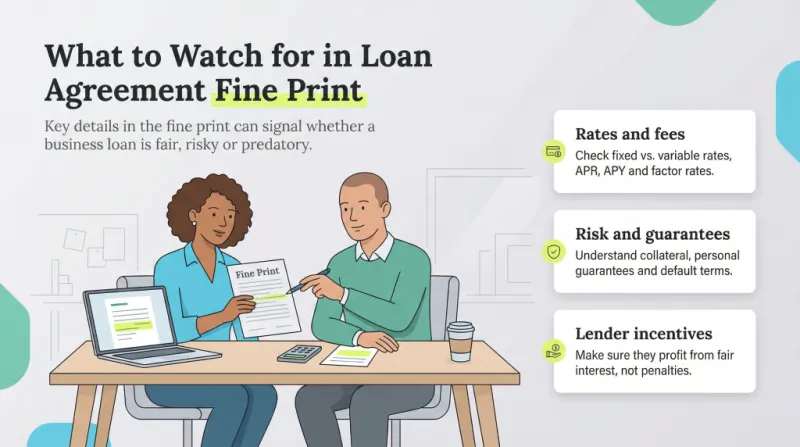
The distinction between debt that builds and debt that burdens is not always obvious at the point of decision. The following framework, applicable to any borrowing decision, can help American borrowers assess whether taking on new debt makes structural sense.
1. Does the debt create or support an income-producing or appreciating asset? A mortgage on a primary residence, a loan for education with a documented wage premium, financing for income-producing real estate, and credit for a business with positive cash flow projections all pass this test. A loan for a vacation, a vehicle upgrade beyond functional necessity, or consolidation of debt without behavioral change does not.
2. Is the cost of the debt lower than the expected return on the asset it funds? This is the core of leverage logic. Borrowing at 7 percent to invest in an asset that historically returns 10 to 12 percent creates a positive spread. Borrowing at 24 percent APR on a credit card to purchase a depreciating consumer good creates a guaranteed loss.
3. Does the monthly obligation fit within a sustainable debt-to-income ratio? The conventional threshold for mortgage qualification is a back-end DTI of 43 percent. Financial planners generally recommend keeping total debt service below 35 percent of gross income. Exceeding these thresholds restricts future borrowing capacity and increases vulnerability to income disruption.
4. Is there a defined exit strategy? Strategic borrowers know when and how they plan to retire each obligation. Whether through scheduled amortization, asset sale, or accelerated payoff, a defined endpoint distinguishes purposeful debt from open-ended financial obligation.
The Wealth-Building Borrowers Have in Common
Across income levels and geographies, Americans who use debt to build wealth tend to share several observable habits. They compare multiple loan offers before committing, understanding that rate differentials compound significantly over time. They borrow for specific, documented purposes rather than in response to opportunity or urgency. They maintain liquidity alongside their debt — recognizing that an emergency fund and a loan can coexist productively. And they revisit their debt portfolio periodically, refinancing when conditions improve and retiring obligations when the math favors early payoff.
None of these behaviors require exceptional income or financial sophistication. They require a framework — and the discipline to apply it before signing, not after.
For borrowers evaluating their current debt mix or considering a new loan, the most valuable first step is a complete inventory: every outstanding balance, interest rate, remaining term, and monthly payment, mapped against the asset or purpose each obligation originally funded. That map, clearly drawn, tends to make the path forward considerably more obvious.